
A bespoke laboratory is not automatically better than a standard one. It is a better fit when your workflow, room geometry, or regulatory environment doesn't match off-the-shelf furniture.
Buyers often ask for customization too early, or skip it where it would have saved money. This guide covers where custom design pays off and what to confirm before you place an order.
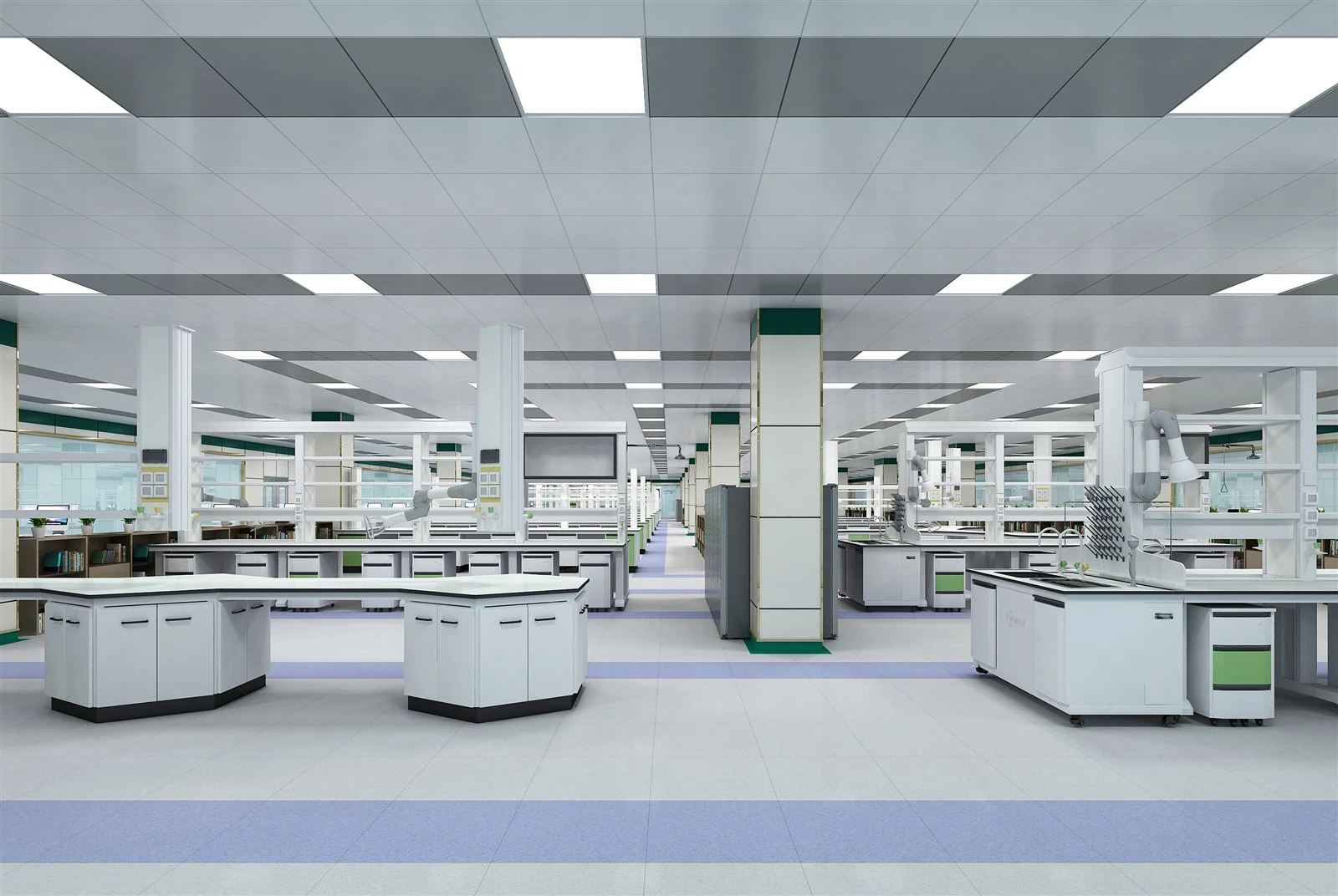
What "Bespoke Laboratory" Usually Means in Procurement
In practice, the term covers a range of work. At one end is a standard bench system with a few modified dimensions. At the other is a fully planned lab with custom casework, integrated services, fume extraction, and layouts drawn around specific instruments.
Most projects sit in the middle. Standard modules form the base, and custom elements are added only where the application requires them. That hybrid approach generally keeps lead time and cost under control.
Where Customization Is Worth It
Custom work tends to justify itself in a few situations:
Irregular rooms. Retrofits in older buildings, with columns, sloped walls, or fixed service risers, rarely suit standard module widths.
Instrument-specific benches. Balances, microscopes, and heavy analytical equipment have different requirements for vibration, load, and cable routing.
Process-driven layouts. If sample flow moves in a fixed sequence, bench height and storage position affect daily efficiency more than most buyers expect.
Specific chemical exposure. A lab handling strong acids needs a different worktop and cabinet specification than a physics or electronics lab.
Where the room is a regular rectangle and the work is general-purpose, standard modules usually give the same result for less.
Material Selection: The Decision That Drives Service Life
Material choice affects long-term cost more than almost any other specification.
Epoxy resin worktops are widely used where chemical resistance matters. Phenolic resin tends to suit labs with moderate chemical exposure and a need for lighter weight. Stainless steel is common in cleanroom, food, and pharmaceutical settings because it is easy to clean. Laminate can work in dry labs, but it generally isn't suited to repeated solvent contact.
Cabinet carcasses matter too. Melamine-faced board, powder-coated steel, and polypropylene each behave differently around moisture and corrosive vapors. In most cases the cheapest carcass is where early failures start, particularly at edges and hinges.
A low quote often reflects a thinner worktop or a lighter hinge, not better pricing. Over a ten-year period, replacement and downtime usually cost more than the original saving.
Specifications Buyers Often Overlook
Some parameters get ignored until installation:
Worktop thickness and edge detail, not just material name
Load rating per bench and per cabinet, including for heavy instruments
Service integration: sinks, gas, power, data, and where they enter the bench
Adjustable feet and leveling range for uneven floors
Door clearances against fume hood sashes and neighboring equipment
Standard vs Custom: A Practical Comparison
| Factor | Standard modules | Bespoke design | ||
| Lead time | Generally shorter | Longer, drawing approval required | ||
| Unit cost | Lower | Higher, especially at low volume | ||
| Fit to room | Compromises likely | Planned around the space | ||
| Future changes | Easier to reconfigure | Harder to reuse elsewhere | ||
A reasonable rule is to standardize wherever the function is routine and customize only where the application leaves no alternative.
Common Ordering Mistakes
The most frequent errors are avoidable. Buyers order before confirming site dimensions, skip a review of service positions, or approve drawings without checking door swings. Another is specifying the same expensive worktop across the whole lab when only the wet area needs it.
Confirm these points before ordering:
Verified site measurements, including ceiling height and obstructions
Chemical list, so the worktop and carcass can be matched
Equipment weights and utility requirements
Drawing approval stage and what changes cost after sign-off
Delivery and installation scope, and who handles on-site adjustments
FAQ
Is a bespoke laboratory always more expensive than a standard one?
Usually yes per unit, but not always overall. Custom layouts can reduce wasted space and avoid later modifications. Costs rise most when customization is applied to areas that don't need it.
How long does a custom laboratory project typically take?
It depends on scope and the approval process. Drawing revisions often take longer than production, so a fast sign-off helps.
Which worktop material should I choose for a chemistry lab?
Epoxy resin is commonly specified for heavy chemical exposure. Confirm the chemical list with the supplier before deciding, since resistance varies by reagent.
Can I mix standard and custom furniture in one lab?
Yes, and it is a common approach. Use standard modules for general benches and custom units for instrument areas or irregular spaces.
Planning a bespoke laboratory and unsure which parts should be customized? Contact our team to discuss materials, dimensions, service integration, and layout options. Sending your floor plan and chemical list will help us give a more accurate recommendation.