
What Is a Plumbed Eyewash Station?
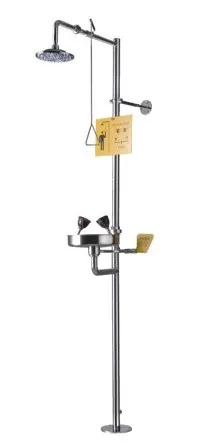
A plumbed eyewash station is a permanent fixture connected directly to a building's potable water supply. Designed for static work environments, it delivers a continuous flow of water at a minimum of 0.4 gallons per minute for eyewashes or 3.0 GPM for eye/face washes to flush hazardous substances from the eyes or face for at least 15 minutes, as required by ANSI Z358.1 standards.
Key Features:
- Fixed installation: Mounted to walls or floors near hazard zones.
- Tempered water compatibility: Can integrate with mixing valves to maintain water temperatures between 16–38°C, preventing thermal shock.
- Low maintenance: Requires weekly activation to clear pipe sediment but no frequent water replacement.
- Uninterrupted flow: Relies on building water pressure, eliminating concerns about reservoir capacity.
What Is a Portable Eyewash Station?
A portable eyewash station is a self-contained, movable unit that stores its own water supply. It's designed for environments where plumbing is unavailable, hazards are mobile, or temporary workspaces exist. These units comply with ANSI standards by delivering 15 minutes of flushing via pressurized tanks, gravity-fed systems, or even personal squeeze bottles (supplemental equipment).
Key Features:
- Mobility: Can be relocated quickly to follow shifting hazards (e.g., construction sites or fieldwork).
- No plumbing required: Ideal for remote labs, outdoor facilities, or retrofitted spaces.
- Limited temperature control: Most units lack heating/cooling mechanisms, risking discomfort in extreme climates.
- Higher maintenance: Stagnant water must be replaced frequently (every 3–6 months) and treated with preservatives.
Key Differences Between Plumbed and Portable Eyewash Stations
| Factory |
Plumbed Eyewash Station
|
Portable Eyewash Station
|
| Installation & Mobility | Permanent, fixed installation near hazard zones. Requires plumbing. | Freestanding, movable, ideal for dynamic or remote workspaces. |
| Water Source & Flow | Connects to building water supply for unlimited flow. | Relies on stored water (15–20 gallons); may deplete during use. |
| Maintenance | Weekly 3-minute activation to clear sediment; annual inspections. | Weekly visual checks; frequent water replacement and preservatives. |
| Temperature Control | Compatible with tempering valves (60–100°F/16–38°C). | Depends on ambient conditions (risk of freezing or overheating). |
| Compliance & Safety | Easier ANSI compliance (consistent flow/temperature). | Higher compliance risk if water isn't properly maintained. |
How to Choose Between Plumbed and Portable Stations for Your Lab
Selecting the right eyewash station hinges on answering these questions:
1. Is the hazard static or mobile?
Static hazards (e.g., fixed chemical workstations): Plumbed stations ensure reliable, on-demand access.
Mobile hazards (e.g., fieldwork, construction): Portable units adapt to changing environments.
2. Is tempered water critical?
Labs in extreme climates (e.g., unheated warehouses) risk exposing users to dangerously cold or hot water. Plumbed stations with tempering valves mitigate this risk.
3. What is the lab's infrastructure?
Retrofitting plumbing into older buildings may be cost-prohibitive. Portable stations offer a simpler, budget-friendly solution.
4. How rigorous is your maintenance protocol?
Portable stations demand meticulous upkeep. If your team lacks capacity for weekly checks, plumbed stations reduce compliance risks.
5. Are supplemental units needed?
Even in labs with plumbed stations, portable squeeze bottles can provide immediate relief while victims reach the primary station.
Can a plumbed eyewash station be portable?
No, a plumbed eyewash station is inherently not portable. By design, it is permanently connected to a building's plumbing system and fixed in a specific location to provide a continuous, ANSI-compliant flow of potable water. Its installation requires piping, mounting to walls or floors, and integration with the facility's water supply and drainage infrastructure, making relocation impractical or impossible without significant construction work.
Portability, by contrast, is a defining feature of self-contained portable eyewash stations, which store their own water supply and can be moved freely. Attempting to repurpose a plumbed station as "portable" would violate safety standards, compromise functionality, and risk worker safety during emergencies.
Conclusion
Both plumbed and portable eyewash stations save lives, but only if they're tailored to your lab's specific risks. Plumbed stations excel in permanent, temperature-controlled environments with stable hazards, while portable units prioritize flexibility for mobile or remote operations.