
Stainless steel Lab Furniture and polypropylene (PP) Lab Furniture. Both offer unique advantages, but their suitability depends on specific lab requirements. This in-depth comparison explores their properties, applications, and limitations to help you make an informed decision.

Material Properties and Durability
Stainless Steel
Stainless steel (typically grades 304 or 316) is an alloy of iron, chromium, and nickel. Its key strengths include:
- Corrosion Resistance: Resists rust and oxidation, especially in environments exposed to water, acids, and alkalis. Grade 316 offers enhanced resistance to chlorides.
- Structural Strength: High load-bearing capacity, ideal for heavy equipment or crowded workspaces.
- Temperature Tolerance: Withstands extreme temperatures (up to 1,500°F/815°C), making it suitable for autoclaves or furnaces.
- Hygienic Surface: Non-porous and easy to sanitize, critical for biosafety labs, cleanrooms, or pharmaceutical settings.
Weaknesses: Prone to visible scratches, which can harbor contaminants. May corrode under prolonged exposure to hydrochloric acid or chlorine-based chemicals.
Polypropylene
Polypropylene is a thermoplastic polymer known for:
- Chemical Inertness: Exceptional resistance to nearly all acids, bases, solvents (e.g., acetone, ethanol), and corrosive salts.
- Lightweight: Easier to install and reconfigure compared to steel.
- Non-Conductive: Reduces risks in electrical or static-sensitive environments.
- Cost-Effectiveness: Generally cheaper upfront than stainless steel.
Weaknesses: Lower heat tolerance (softens at ~140°F/60°C), prone to surface scratching, and limited structural rigidity for heavy loads.
Chemical Resistance
Stainless Steel Performs well against dilute acids, alkalis, and organic compounds. However, it struggles with Hydrochloric acid (concentrated), Chlorides (e.g., seawater, bleach), Chlorides (e.g., seawater, bleach) and Iodine solutions.
Polypropylene Virtually impervious to Hydrofluoric acid, Sulfuric/nitric acids (at varying concentrations) and Solvents like benzene and toluene.
Hydrofluoric acid.
Key Insight: PP excels in labs handling aggressive chemicals, while stainless steel suits milder environments requiring sterilization.
Maintenance and Longevity
Stainless Steel:
- Requires regular cleaning with non-abrasive agents to prevent staining.
- Scratches can be polished out, but deep gouges may compromise corrosion resistance.
- Lifespan: 20+ years with proper care.
Polypropylene:
- Low maintenance; resistant to staining but susceptible to UV degradation.
- Scratches are harder to repair and may trap contaminants.
- Lifespan: 10–15 years, depending on chemical exposure.
Applications in Specific Lab Types
Stainless Steel Is Ideal For:
- Biosafety Labs (BSL-2/3): Smooth surfaces prevent microbial growth.
- Pharmaceutical Manufacturing: Withstands frequent sterilization (steam, UV).
- High-Temperature Work: Combustion analysis, material testing.
Polypropylene Is Ideal For:
- Chemistry/Wet Labs: Especially those using HF, strong oxidizers, or organic solvents.
- Electronics Labs: Non-conductive surfaces protect sensitive components.
- Budget-Conscious Facilities: Lower initial costs for teaching labs or startups.
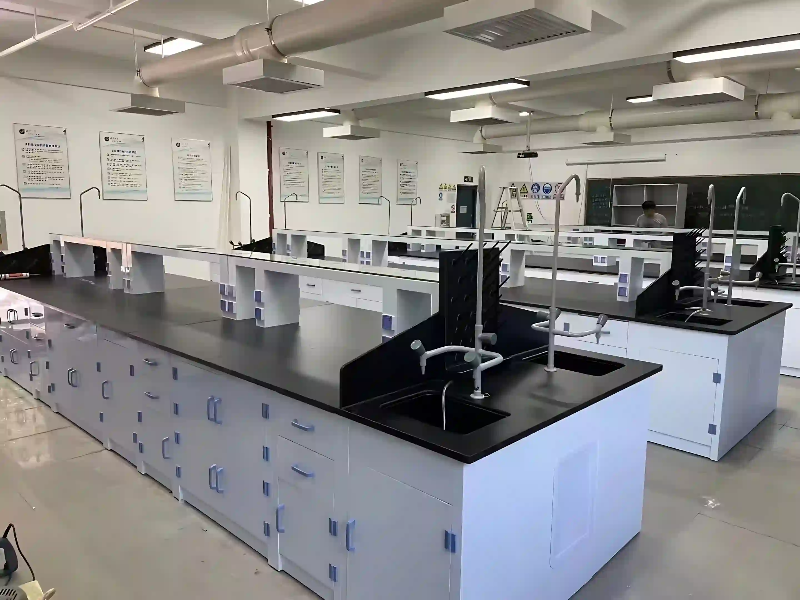
Stainless Steel vs Polypropylene Lab Bench
Best For: Cleanrooms, biosafety labs, pharmaceutical and high-temperature applications.
Advantages:
- Exceptional durability under heavy equipment and repeated chemical exposure.
- Seamless welds and smooth surfaces simplify disinfection.
- Resistant to spills from acids (except strong chlorides), solvents, and biological agents.
Limitations:
- Heavier and costlier to install.
- May corrode if exposed to halogen compounds over time.
Best For: Wet chemistry labs, analytical labs handling aggressive chemicals like HF or strong oxidizers.
Advantages:
- Highly chemical-resistant and lightweight.
- Non-metallic design minimizes static or conduction risks.
- More affordable for academic or small-scale facilities.
Limitations:
- Deforms under high heat or heavy loads.
- Surface is more prone to wear and scratching over time.

Stainless Steel vs Polypropylene Lab Cabinet
Best For: Sterile storage in pharmaceutical, food, or biotech environments.
Advantages:
- Long service life, even in humid or corrosive conditions.
- Can endure frequent cleaning and decontamination.
- Lockable designs improve security and contamination control.
Limitations:
- More expensive and may require reinforcement for mobility.
- Susceptible to cosmetic damage from surface abrasions.
Best For: Chemical storage, especially for corrosive liquids and fumes.
Advantages:
- Inert to most acids and solvents; safe for aggressive chemical storage.
- Lighter and often modular, easy to relocate.
- Will not rust, even in highly humid environments.
Limitations:
- Lower mechanical strength - may warp or crack under heavy weight.
- May degrade under long-term UV exposure or extreme temperatures.
Stainless Steel vs Polypropylene Lab Countertop
Best For: Areas requiring cleanliness and heat tolerance, such as autoclaving or microbial sample prep.
Advantages:
- Seamless integration with sinks, backsplash, or fume hoods.
- High temperature resistance makes it compatible with open flames or heated instruments.
- Easy to sterilize between experiments.
Limitations:
- Surface may become scratched or dented, affecting appearance and long-term hygiene.
- Reflective surface may produce glare under intense lab lighting.
Best For: Fume hoods, reagent weighing stations, or chemical mixing areas.
Advantages:
- Withstands exposure to corrosive spills without degradation.
- Matte finish reduces glare; safer for precision work.
- Chemically bonded seams can provide a continuous, spill-proof surface.
Limitations:
- Not suitable for heat-intensive tasks.
- May sag if unsupported over long spans.
Conclusion
Stainless steel is ideal for labs needing high durability, heat resistance, and easy sterilization. Polypropylene is better suited for environments dealing with aggressive chemicals and where cost or chemical resistance is a priority.