
Proper storage of gas cylinders is essential to ensure workplace safety and compliance with industry regulations. One critical aspect is storing gas cylinders vertically rather than horizontally. Here's why vertical storage is the safest and most effective practice, supported by standards from both NFPA and OSHA.
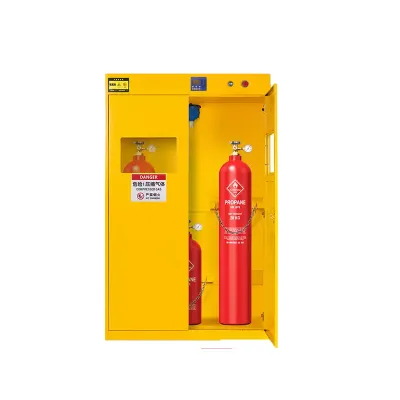
1. Safety and Valve Protection
Gas cylinders are designed to be stored and operated in a vertical position. When stored vertically, the internal pressure relief devices and valves function properly, preventing dangerous leaks or explosions. Horizontal storage can damage valves or safety devices, increasing the risk of accidents.
2. Preventing Liquid Gas Hazards
Many gas cylinders contain liquefied gases. In a vertical position, the liquid settles at the bottom of the cylinder, and only gas is drawn from the valve. Horizontal storage risks liquid entering the gas outlet, which can cause irregular gas flow, equipment damage, or hazardous conditions.
3. Stability and Secure Storage
Vertically stored cylinders can be firmly secured with straps or brackets inside a gas cylinder cabinet, preventing tipping or rolling. This reduces the risk of physical damage and enhances overall workplace safety.
4. Compliance with NFPA Standards
The National Fire Protection Association (NFPA), through standards like NFPA 55 (Compressed Gases and Cryogenic Fluids Code), requires that cylinders be stored vertically and secured to prevent falling. NFPA also emphasizes proper ventilation and separation of incompatible gases to reduce fire hazards.
5. OSHA Regulations
The Occupational Safety and Health Administration (OSHA) enforces workplace safety under 29 CFR 1910.101. OSHA mandates that compressed gas cylinders be stored upright, secured, and protected from accidental damage. Valve protection caps must be used when cylinders are not in use, and proper storage practices must be followed to avoid workplace injuries.