
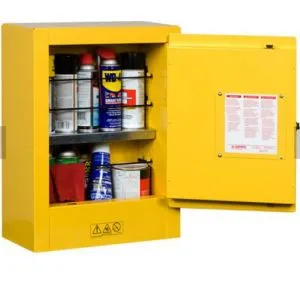
Flammable storage cabinets are essential for safely storing volatile chemicals like alcohols, solvents, and fuels. One critical safety feature of these cabinets is proper grounding. But why is a ground wire necessary, and how should it be installed? Let's break it down.
The Danger of Static Electricity
When flammable liquids are poured, transferred, or agitated, static electricity can build up due to friction between the liquid and the container. If this static charge discharges (as a spark), it can ignite flammable vapors, leading to a fire or explosion.
A ground wire safely directs this static charge into the earth, preventing dangerous sparks.

Metal Cabinets Conduct Electricity
Most flammable storage cabinets are made of conductive metal. Without grounding:
- The cabinet itself can accumulate static electricity.
- If nearby electrical equipment malfunctions, stray currents could energize the cabinet.
- A spark could occur if someone touches the cabinet while it's charged.
Grounding ensures the cabinet stays at the same electrical potential as the ground, eliminating these risks.

Compliance with Safety Standards
Regulations like OSHA 29 CFR 1910.106 and NFPA 30 require flammable storage cabinets to be grounded to prevent fire hazards. Failure to comply can result in fines or workplace accidents.
Preventing Secondary Hazards
Even if the stored chemicals are in sealed containers, leaks or spills can release flammable vapors. A single spark from static discharge could be catastrophic. Proper grounding is a simple but life-saving precaution.
How to Properly Ground a Flammable Storage Cabinet
Step 1: Use a Dedicated Grounding Wire
- Use a copper grounding wire (typically 12-14 AWG) for best conductivity.
- Avoid using pipes or structural steel as a ground-use a proper grounding rod or building ground system.

Step 2: Connect to a Clean, Unpainted Surface
- Attach the wire to a bare metal spot on the cabinet (scrape off paint if necessary).

- Use a grounding clamp or bolt for a secure connection.

Step 3: Link to a Verified Ground Source
- Connect the other end to:
- A grounding rod driven into the earth.
- The building's grounding busbar (if available).
- Ensure the connection is tight and corrosion-free.
Step 4: Test the Ground Connection
- Use a multimeter to check for continuity between the cabinet and ground.
- Resistance should be less than 1 ohm for effective grounding.