
Getting the lab size wrong is one of those mistakes you only fully appreciate once you're already living with it - benches crammed against the wall, no room to open a fume hood door properly, or a space so oversized that half the furniture sits unused while your budget takes the hit. I've worked with enough lab contractors, university facility teams, and pharmaceutical procurement managers to know: size planning is where most projects quietly go sideways before a single piece of furniture is installed.
The Sizing Mistakes That Keep Showing Up
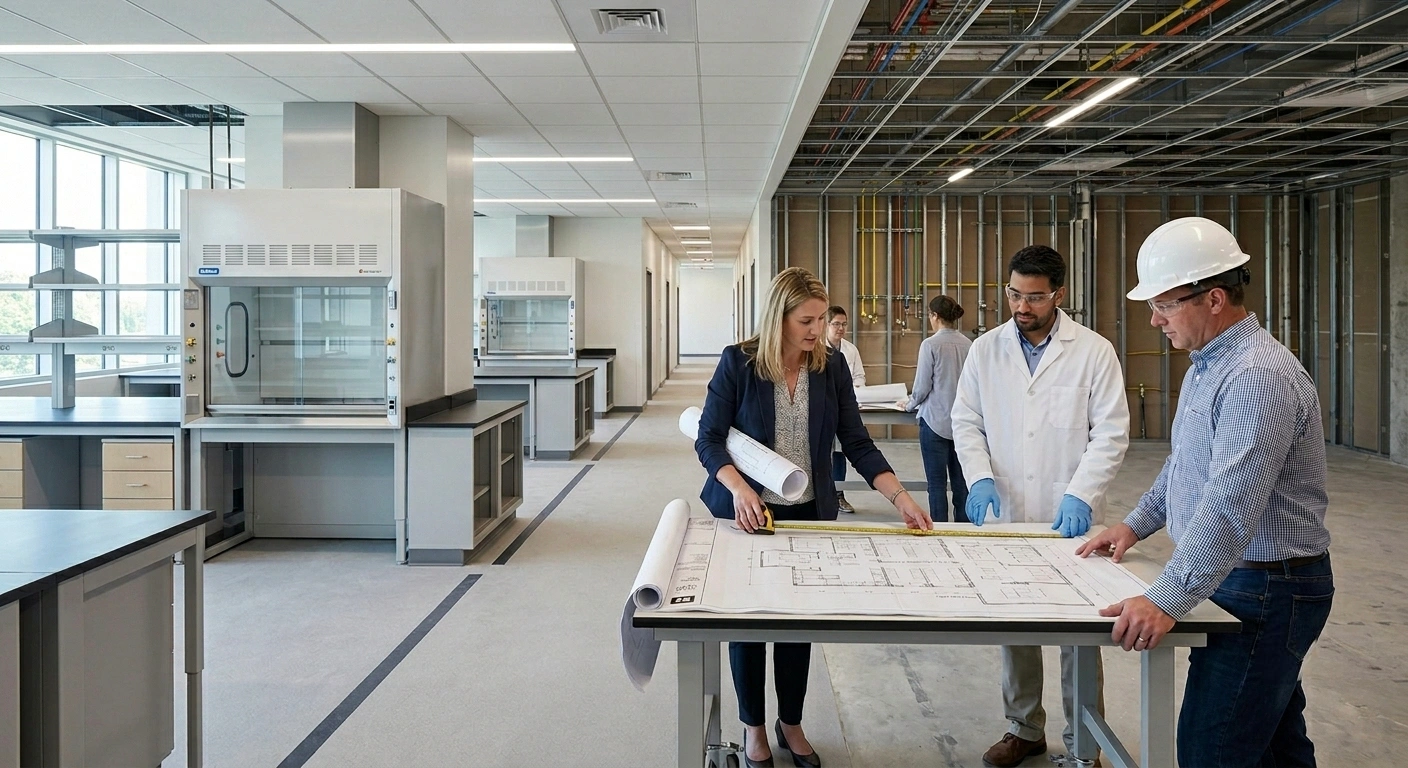
The most common error? Treating lab size as a square footage number rather than a functional layout problem. Teams get a floor plan, zone it on paper, and assume the furniture will "figure itself out" during procurement. It doesn't.
A few patterns I see regularly:
Under-planning circulation space
Most international lab safety standards recommend a minimum 1.5-meter clear aisle between facing benches. In practice, I see corridors at 1.1 or 1.2 meters all the time - tight enough that two people can't pass safely while carrying samples or equipment.
Ignoring utility access early
Plumbing and gas lines get roughed in well before furniture is specified. If your bench layout doesn't account for where those utilities land, you're either paying for expensive rerouting later or accepting an arrangement that wasn't your first choice.
No buffer for expansion
A lab fitted out perfectly for 12 researchers becomes operationally painful the moment a new grant brings in four more people. Leaving even two to three meters of unbuilt bench run now saves real rework cost later.
Bigger room, same service zone
A 200 sqm chemical lab with one centrally-located fume hood cluster is a safety problem. Room size needs to match dispersed ventilation infrastructure - not just headcount.
Practical Size References by Lab Type
These aren't textbook figures - they're the numbers I work from in real project conversations:

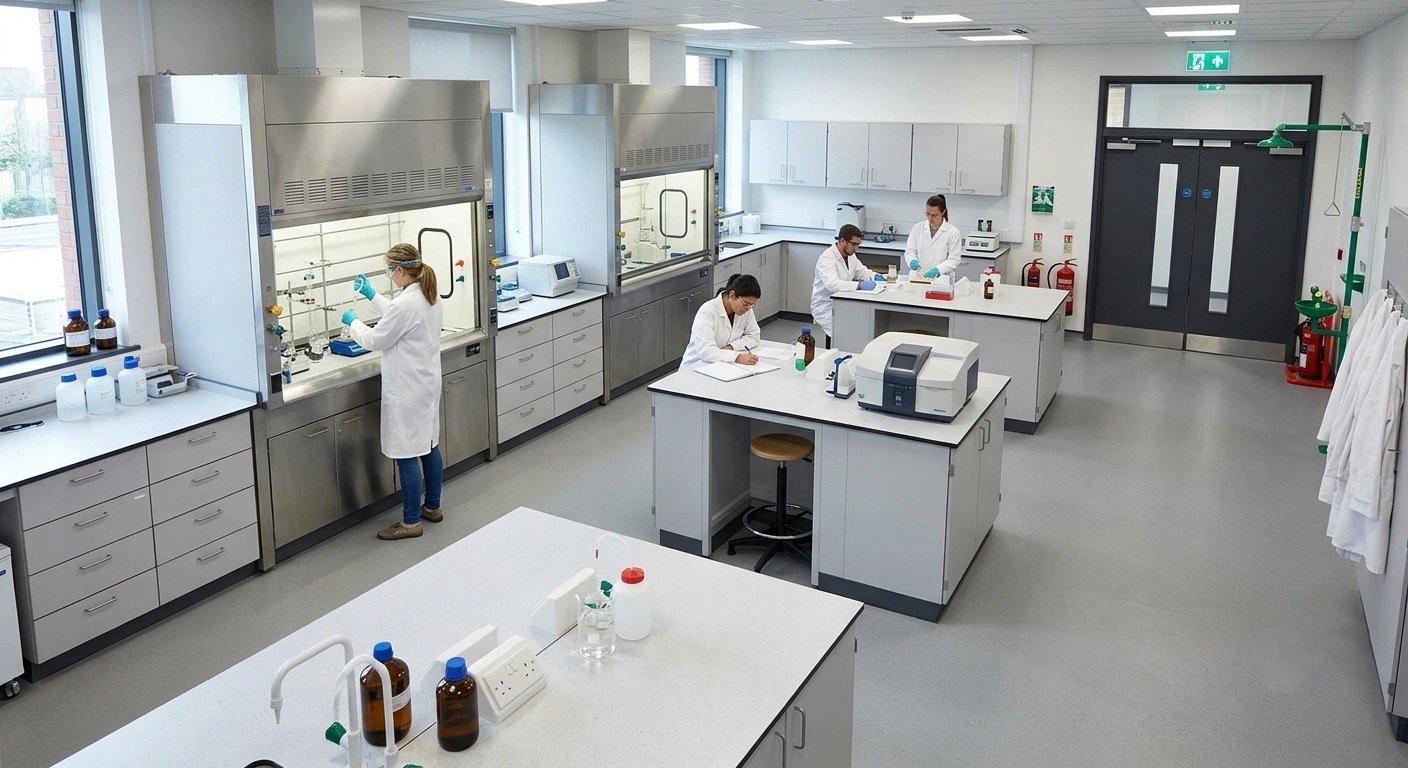
Teaching & University Labs For undergraduate instruction, 4.5–5.5 sqm per student workstation is the functional baseline. With 20 students, that's a minimum net lab area of 90–110 sqm before accounting for prep rooms and storage. Aisle width between island benches is non-negotiable during class sessions.
Chemical Research Labs A single-researcher chemical lab with moderate fume hood use needs roughly 15–20 sqm of net working area per person. A 4-person team typically functions in 70–85 sqm - assuming one or two full-length fume hoods, integrated chemical storage, and at least one unobstructed emergency egress route.
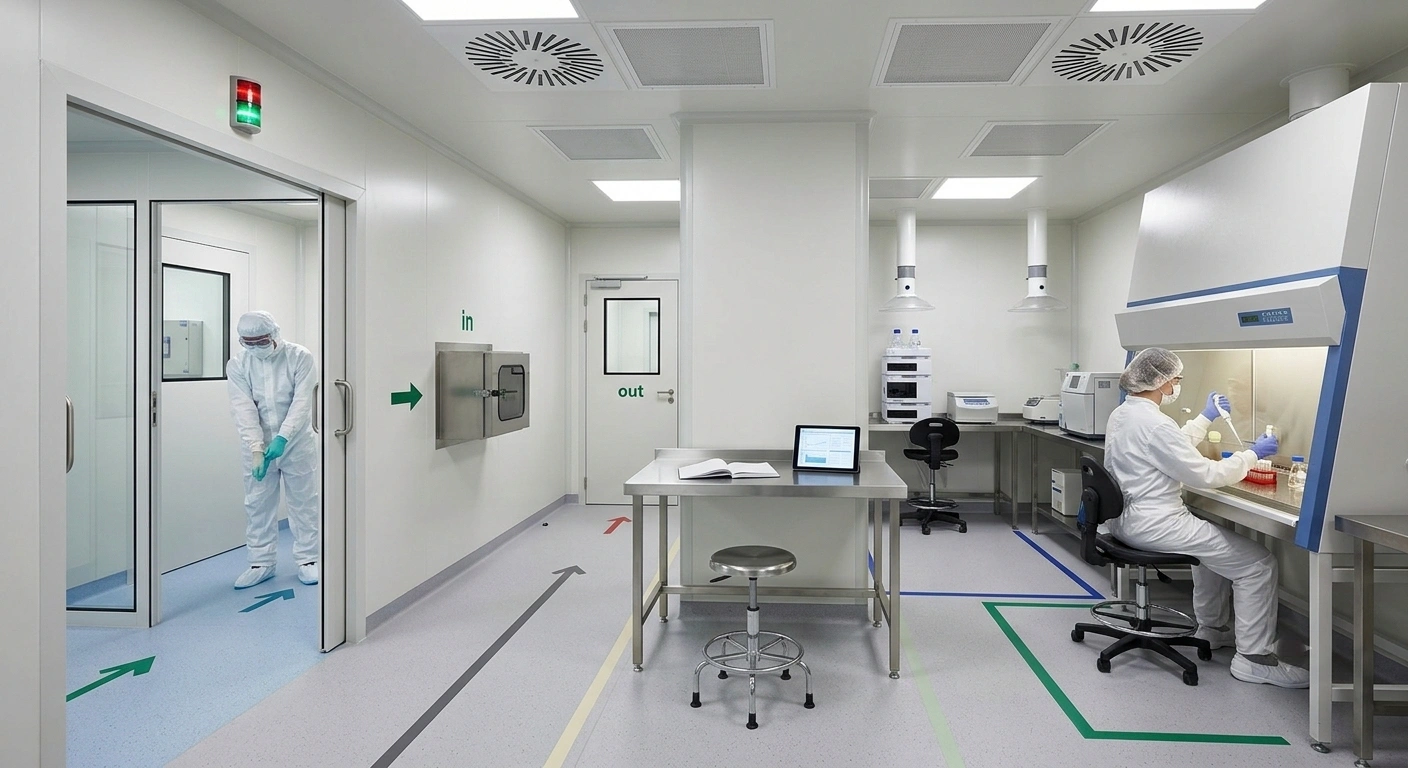
Pharmaceutical & GMP Labs This is where size planning intersects directly with regulatory compliance. Controlled-environment labs require gowning anteroom space, pass-through provisions, and separated material flows. For a small QC lab, 40–60 sqm is often the minimum viable footprint once you factor in biosafety cabinet clearances, equipment zones, and documentation areas. Underestimating these requirements during design can compromise validation later.
Why Size Directly Affects Your Furniture Choices
Here's what rarely gets discussed in early planning: room dimensions don't just determine how many benches fit - they determine what kind of benches can be installed at all.
Standard modular lab furniture is built around 600mm and 750mm depth increments. When your room has irregular shapes, structural columns breaking up wall runs, or plumbing roughed in at non-standard intervals, standard modules often don't close out cleanly. Dimensional accuracy in your floor plan is a prerequisite for sensible furniture procurement - not an afterthought.
Ceiling height matters too. Lab furniture systems - particularly overhead storage and service distribution (electrical trunking, gas manifolds) - are designed for 2.7–3.0 meter clear heights. Lower ceilings in older buildings can limit which systems are technically viable to install.
A Practical Final Thought
If you're early in a lab project - whether building a proposal or briefing suppliers - get your floor plan reviewed for spatial compliance before specifying furniture. Dimensionally sound planning is what separates a fit-out that installs cleanly from one that generates months of change orders.