
What Should You Consider When Choosing Lab Benches?
Lab benches are part of the working infrastructure of a laboratory. They need to accommodate routine tasks, support equipment safely and fit the way people move through the room. A bench that looks suitable in a product photo may still cause problems if its worktop is incompatible with the chemicals in use, its frame is not stable enough for the equipment, or its dimensions leave too little clearance.
For purchasing teams, the aim is to specify a bench around the work being carried out-not simply to compare catalogue prices. A clear brief covering materials, loading, layout and services makes supplier quotations easier to assess and reduces the chance of changes after delivery.
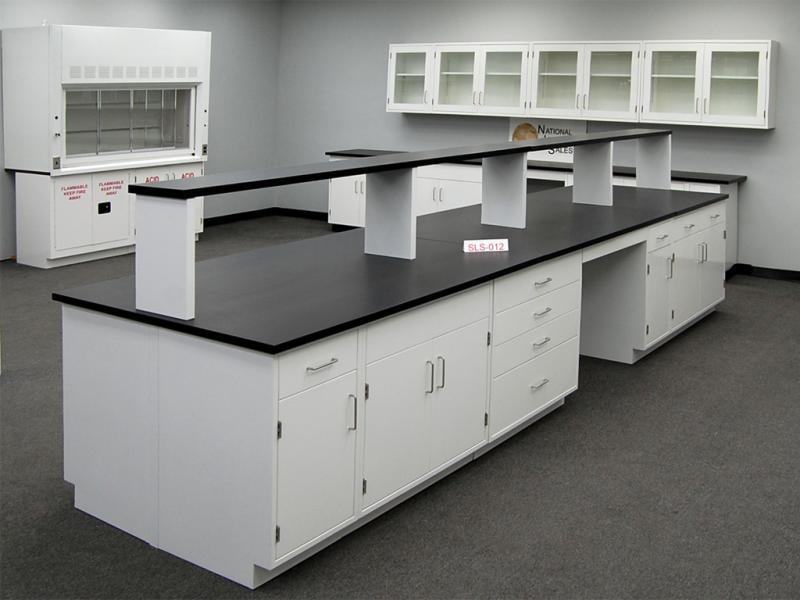
1. Match the Worktop Material to the Application
- The worktop has direct contact with chemicals, samples, equipment and cleaning agents, so material selection should start with the laboratory's actual procedures. Phenolic resin is used in many general-purpose laboratories because it offers practical chemical resistance and is relatively straightforward to maintain. Epoxy resin is often considered where stronger chemical or heat resistance is required. Ceramic can suit applications involving high temperatures, while stainless steel is frequently specified where a smooth, easy-to-clean surface is a priority. Compact laminate products, including some Trespa grades, may be suitable for teaching and general laboratory areas, but their chemical performance depends on the specific grade.
- These materials are not interchangeable. A material name alone does not confirm that a worktop will withstand a particular chemical. Concentration, temperature, contact time and the cleaning process can all affect performance. Before approving a specification, ask the supplier for resistance information for the exact product grade and check it against the chemicals used in the laboratory.
2. Check the Frame, Load Rating and Stability
- A laboratory bench may carry much more than general laboratory supplies. Centrifuges, ovens and other equipment can create substantial or concentrated loads; some also generate vibration while operating. The frame, supports and worktop therefore need to be considered as one structure.
- When reviewing a quotation, look beyond a single load-capacity figure. Ask how the rating was established and whether it refers to a uniformly distributed load or a concentrated load. Check the frame material and construction, steel thickness where relevant, joints, surface finish, leg arrangement and whether adjustable levelling feet are included. These details help explain how the bench is expected to perform once installed.
- Load capacity does not necessarily mean vibration control. A standard bench may carry an analytical balance without providing the stability needed for accurate weighing. Where measurement sensitivity matters, consider a dedicated weighing station or a purpose-designed vibration-isolation table rather than assuming that a heavier general-purpose bench will be sufficient.
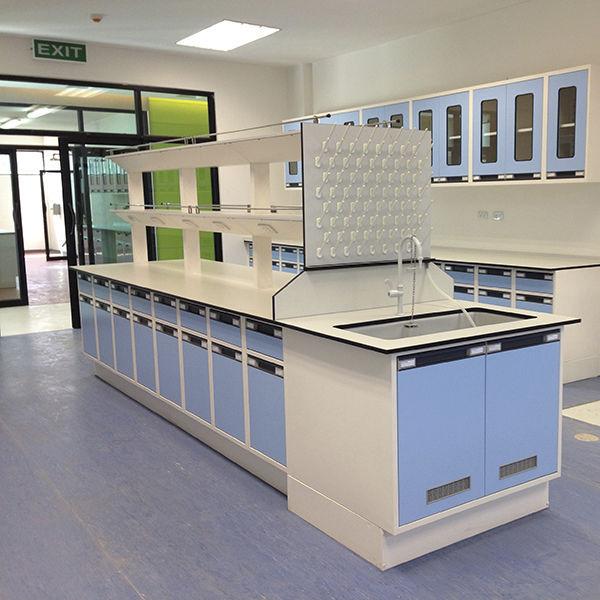
3. Choose a Configuration That Fits the Room and Workflow
①Wall benches are commonly placed around the perimeter of a room. They can work well where space is limited or where equipment and storage are best kept against the walls.
②Island benches provide access from more than one side and are often used in larger teaching or research laboratories with several users.
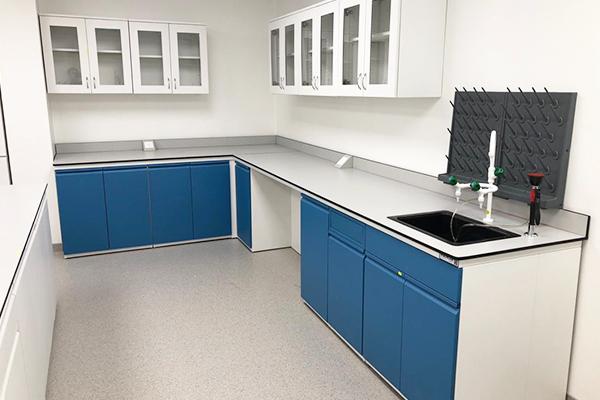
③L-shaped benches can make use of corner space or help separate activities.
④Mobile benches offer flexibility, provided their castors, brakes and load rating are suitable for the intended use.
The right layout depends on more than the room's overall dimensions. Consider door swings, walkways, access to emergency equipment, equipment footprints and the position of water, gas and electrical services. Confirm the equipment plan before finalising bench dimensions. Otherwise, a bench may fit the floor plan but leave insufficient working clearance or obstruct a service connection.
4. Plan Storage, Services and Customisation
- Laboratory benches are often specified as part of a wider furniture system. Under-bench cabinets, drawers, overhead shelving, reagent racks, sinks, drainage, power outlets and service connections can all affect how the workspace functions. The useful configuration is the one that supports the work process without obstructing access or creating storage that will not be used.
- Standard modules are often a sensible starting point for projects with repeated room layouts or several similar work areas. Custom dimensions and fittings are more relevant when the project involves existing buildings, unusual room geometry, specialist equipment or fixed service points. Before ordering, share equipment dimensions, room drawings and service locations with the supplier. Also clarify which connections are included in the furniture scope and which must be completed by local contractors.
5. Compare the Total Project Cost, Not Just the Unit Price
- The lowest quotation may not represent the lowest project cost. Differences in worktop grade, frame construction, hardware, packaging and installation requirements can affect service life and the amount of work needed after delivery. A useful comparison should identify exactly what is included in each offer.
- For an international order, packaging and shipping volume deserve particular attention. Fully assembled units may take up more container space, while flat-pack or knock-down designs can reduce shipping volume in some cases. The saving needs to be weighed against local assembly labour, installation time and the quality of the assembly instructions. Ask suppliers to state the manufacturing lead time, packing method, delivery terms and installation responsibilities rather than treating freight as the only logistics cost.
6. Assess the Supplier's Technical Information
- A useful quotation should allow the buyer to compare like with like. Request a clear product specification, worktop material and grade, relevant chemical-resistance information, frame details, load-rating basis, dimensioned drawings or CAD files, available options, packaging details, lead time, warranty terms and after-sales arrangements.
- Be cautious when two offers appear similar but describe their materials or construction differently. Worktop thickness, frame design and hardware can vary even when the product photographs look almost identical. For larger projects, review drawings and, where practical, material samples before production begins. Resolving a specification question at this stage is generally easier than correcting a mismatch after the furniture has been manufactured or delivered.
Frequently Asked Questions
What is the best material for laboratory workbench tops?
+
-
There is no single material that suits every laboratory. Phenolic resin is commonly used for general laboratory work, while epoxy resin or ceramic may be considered for more demanding chemical or heat exposure. Stainless steel is often selected where cleanability is a priority. The final choice should be checked against the chemicals, temperatures and cleaning methods used on site.
How much weight can a laboratory bench support?
+
-
It depends on the bench dimensions, frame, worktop and support arrangement. Ask the supplier for the rated capacity and confirm whether it applies to a uniformly distributed or concentrated load. If heavy or vibrating equipment will be used, discuss stability as well as weight capacity.
What is the difference between a wall bench and an island bench?
+
-
A wall bench is positioned along a wall and is useful for perimeter work areas. An island bench can be accessed from several sides and is often used where multiple people share a workspace. The choice depends on room size, circulation routes, equipment placement and service locations.
Can laboratory benches be customised?
+
-
Yes. Common options include non-standard dimensions, different worktop materials, cabinets, drawers, shelving, sinks and service fittings. Customisation is most useful when it solves a defined requirement, such as fitting existing equipment or aligning with fixed utility points.
What information should buyers provide when requesting a quotation?
+
-
Provide room dimensions or a floor plan, preferred bench layout, worktop requirements, equipment sizes and weights, storage needs, service locations and estimated quantities. CAD drawings are helpful when available. These details give the supplier a clearer basis for preparing a technically relevant quotation.
Planning a laboratory project and need help specifying the workbenches? Contact BOKA to discuss worktop materials, dimensions, frame options, storage and service requirements. Share your room plan and equipment details with our team so we can review a configuration that fits the way your laboratory operates.